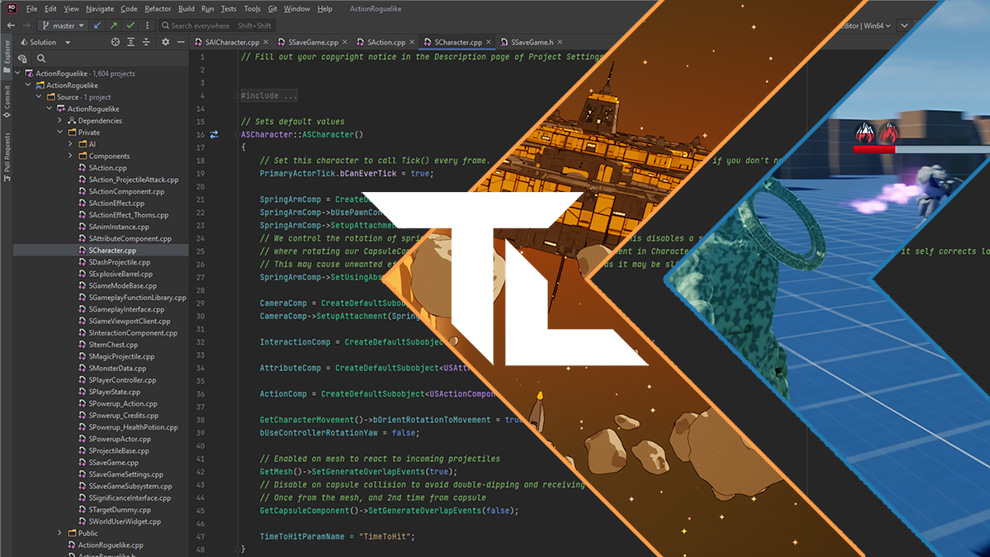
Unreal Engine C++: Your Essential Starter Guide and Learning Path
If you're embarking on your journey with C++ programming for Unreal Engine, you're stepping into a world of unparalleled power and flexibility for game development. Many developers start with Unreal Engine's visual scripting system, Blueprints, which offers incredible speed and accessibility. However, there comes a point for many—often after gaining a foundational understanding of the engine's core concepts—where the desire to delve deeper, optimize performance, and unlock the engine's full potential becomes irresistible. This guide will provide you with a comprehensive learning path, vital resources, and realistic expectations for mastering C++ within the Unreal Engine ecosystem.
Why C++ for Unreal Engine? The Power Beyond Blueprints
While Blueprints are fantastic for rapid prototyping and many gameplay elements, C++ programming for Unreal Engine offers significant advantages that become crucial for complex projects and professional development:
- Performance: C++ code generally executes faster than Blueprint scripts, which is critical for performance-intensive systems like AI, physics, or complex gameplay mechanics.
- Full Engine Access: C++ gives you direct access to the entire Unreal Engine source code, allowing you to extend, modify, or even entirely override engine functionalities to suit your specific needs. Blueprints are inherently limited by what the engine exposes to them.
- Robust Framework: Unreal Engine itself is built on C++. Working with C++ allows you to integrate seamlessly into its core architecture, leveraging its powerful features like the Reflection System, Gameplay Framework, and custom memory management.
- Scalability and Maintainability: For large-scale projects with many developers, C++ provides a more structured and organized approach, making code easier to manage, debug, and maintain over time.
- Custom Tools and Modules: If you need to develop custom editor tools, engine modules, or integrate third-party libraries that aren't Blueprint-compatible, C++ is your only option.
Understanding these benefits is often the catalyst for Blueprint users to transition. As many experienced developers will attest, combining the speed of Blueprints for high-level logic with the performance and depth of C++ for core systems offers the best of both worlds in Unreal Engine development. For more insights on this transition, consider reading Beyond Blueprints: Mastering Unreal Engine C++ Development.
The Essential First Step: Mastering Core C++ Independently
This is arguably the single most important piece of advice you will receive: do not jump straight into Unreal Engine's specific C++ unless you have a solid foundation in pure C++ programming first. Trying to learn both at the same time is akin to trying to learn a new language while simultaneously trying to write a novel in it. The complexities of Unreal Engine's framework and specific coding conventions will overwhelm you if you're still grappling with basic C++ syntax and concepts.
Your Pure C++ Learning Path:
-
Forget Unreal (Temporarily): For the first several months, focus solely on learning standard C++. This means understanding core concepts like:
- Variables, data types, and operators.
- Control flow (if/else, switch, loops).
- Functions.
- Pointers and references (a crucial C++ concept!).
- Classes, objects, inheritance, polymorphism (Object-Oriented Programming principles).
- Memory management (stack vs. heap, new/delete).
- Standard Template Library (STL) containers (e.g.,
std::vector,std::map).
-
Choose Your Resources Wisely: While YouTube tutorials are plentiful, for foundational learning, a dedicated textbook is often superior.
- Textbooks: A well-structured C++ textbook builds knowledge incrementally, offers practice exercises, and is easily searchable. It's an investment ($60+), but it signifies a commitment to learning. Look for books with small programming exercises at the end of each chapter. Expect to re-read dense material multiple times.
- Online Courses (Pure C++): Some platforms offer excellent, structured courses specifically for learning core C++.
- Practice: Implement small, independent console applications or basic desktop programs. Don't worry about graphics or games yet. Just focus on logic and data structures. Gradually increase the scope and complexity of these projects.
- Embrace the Struggle: C++ has a steep learning curve, especially concerning syntax and debugging. Expect frustrating moments with forgotten semicolons or curly braces leading to dozens of errors. This is normal. Expertise comes from practice, making mistakes, and learning how to fix them. A genuine commitment of at least a year to truly grasp core C++ is not uncommon for those aiming for proficiency.
This disciplined approach ensures that when you eventually transition to Unreal Engine C++, you'll be focusing on understanding Unreal's framework rather than struggling with fundamental programming concepts. This will make your learning process significantly smoother and more effective.
Bridging Core C++ and Unreal Engine: Key Concepts
Once you have a solid grasp of core C++, you can begin to explore how Unreal Engine leverages and extends the language. Unreal Engine provides a robust framework that utilizes C++ to bring your vision to life, and understanding its unique features is paramount for effective C++ programming for Unreal Engine.
Powerful Features for Unreal C++ Development:
-
Creating Gameplay Classes: In Unreal Engine, you'll extend engine-provided classes like
AActor,APawn,ACharacter,UObject, and more. These are defined using standard C++ syntax but inherit a wealth of boilerplate variables and functions from Unreal's Gameplay Framework. Changes you make to these classes in Visual Studio or Xcode will be reflected in the Unreal Editor after compilation. This hierarchical structure of Objects and Actors is fundamental to building interactive experiences. -
The Unreal Reflection System: This is a cornerstone of Unreal Engine's C++ power. By encapsulating your classes, functions, and variables with Metadata Property Specifier macros (e.g.,
UPROPERTY(),UFUNCTION(),UCLASS()), you expose them to the Unreal Editor. This enables features like serialization, garbage collection, networking replication, and—critically—makes your C++ code accessible to Blueprints. Understanding the Reflection System is vital for integrating your C++ logic seamlessly with the editor and Blueprint workflow. -
Unreal Containers: While standard C++ has containers like
std::vector, Unreal Engine provides its own optimized container classes such asTArray,TMap, andTSet. These are designed to work efficiently within Unreal's memory management and garbage collection systems, offering performance benefits and safer memory handling. -
The Gameplay Framework: This framework provides a structured approach to building games. It defines how different parts of your game communicate and operate, from the game mode that sets the rules (
AGameModeBase) to the players (APlayerController), characters (ACharacter), and even HUDs (AHUD). Familiarizing yourself with this framework's hierarchy and conventions is key to writing organized and scalable game logic. - Delegates: Unreal Engine's Delegates provide a generic, type-safe way to call member functions on C++ objects. They allow you to dynamically bind a function from one object to be called by another object at a future time, even if the caller doesn't know the exact type of the target object. This is incredibly powerful for decoupling game logic and creating event-driven systems.
These features represent a significant part of what makes C++ programming for Unreal Engine so powerful and distinct from generic C++ development. For a deeper dive into these powerful tools, check out Unreal Engine C++: Leveraging Its Powerful Core Features.
Your Learning Arsenal: Resources and Strategies
Once you're ready to bridge your core C++ knowledge with Unreal Engine, a wealth of resources awaits:
- Epic Games Documentation: The official "Programming with C++ Information" section on the Epic Games Developers website is your primary and most authoritative resource. It's comprehensive, always up-to-date, and provides in-depth explanations of Unreal-specific C++ features and APIs. Make it a habit to consult the documentation regularly.
- Official Unreal Engine Learning Portal and YouTube Channel: Epic Games provides numerous free courses and video tutorials covering various aspects of Unreal Engine C++. These are excellent for visual learners and for seeing concepts applied in practice.
- Online Courses (Udemy, GameDev.tv, etc.): Many reputable instructors offer paid courses specifically for Unreal Engine C++. These can provide a structured, project-based learning experience that guides you through building actual games or features. Choose courses that assume a basic C++ understanding.
- Community Forums and Subreddits: Platforms like the official Unreal Engine Forums and the r/unrealengine subreddit are invaluable for asking questions, finding solutions to common problems, and learning from experienced developers.
- Practice, Practice, Practice: This cannot be stressed enough. Start by translating small Blueprint functionalities into C++. Then, try to extend existing engine features or build new gameplay systems entirely in C++. Experiment with the different Unreal Engine C++ features discussed above.
- Learn to Debug: Mastering your IDE's debugger (Visual Studio or Xcode) is crucial. Being able to step through your code, inspect variable values, and understand the program's flow will save you countless hours of frustration.
Conclusion
Embarking on the journey of C++ programming for Unreal Engine is a significant commitment, but it's one that promises immense rewards. The path is challenging, requiring patience, dedication, and a willingness to embrace continuous learning. By first establishing a strong foundation in core C++, then meticulously learning Unreal Engine's unique C++ framework, and continuously practicing, you'll unlock the full potential of this incredible engine. Remember, expertise comes from consistency, making mistakes, and persistently refining your skills. Start your journey today, and prepare to bring your most ambitious game ideas to life.